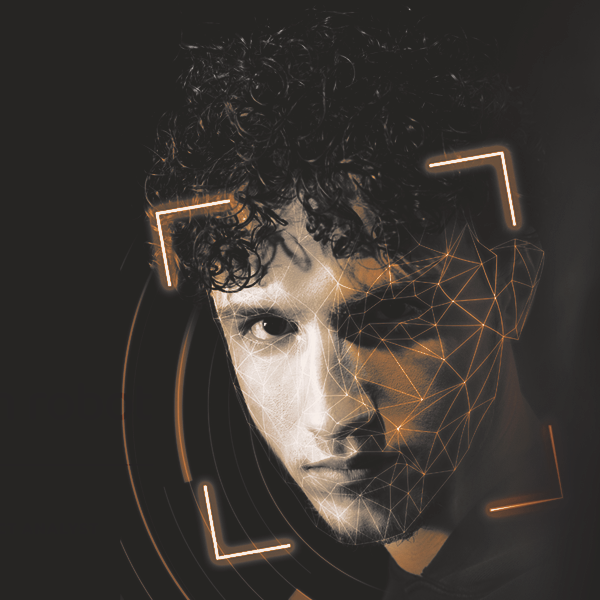
Artificial intelligence is revolutionizing technology and redefining cybersecurity, forcing society to rethink how to protect our digital identities in a world where the truth can be falsified with surprising accuracy.
Deepfakes are fake content generated by artificial intelligence, using deep learning techniques to manipulate images, audio or video. This technology, whose name comes from the combination of “deep learning” and “fake”, makes it possible to create material that appears authentic, but has actually been fabricated with such precision that it is difficult to distinguish it from the real thing.
The desire to manipulate images to alter reality is not new. As early as the 19th century, photographers edited photos to influence public perception, as in the famous portrait of Abraham Lincoln in 1865, which actually showed his face on the body of another politician. For decades, these techniques were used to shape the image of public figures, from the Stalin era to recent presidents.
With the advancement of film and digital technology, visual manipulations evolved into increasingly sophisticated special effects. An iconic example is “Forrest Gump” (1994), where the main character, played by Tom Hanks, is digitally inserted into photographs and historical events, interacting with figures such as John F. Kennedy and Elvis Presley. Likewise, the use of CGI (Computer-Generated Imagery) has allowed recent productions, such as “Rogue One: A Star Wars Story” (2016), to rejuvenate actors like Carrie Fisher, showing how technology can create convincing and realistic images.
As deepfakes became more accessible, their potential for misinformation and manipulation became apparent. One notable example was one featuring Barack Obama from 2018, which illustrated how a public figure’s words could be manipulated in a disturbingly realistic way. These fake videos began to circulate, misleading the public and fueling confusion in an already saturated media landscape, raising serious concerns about the integrity of information and trust in sources.
Today, the relevance of deepfakes has intensified with the rise of digital platforms and online interaction. The authenticity of identities has become more critical than ever, as the line between real and fake is constantly blurring. In a world where people rely on visual content to form opinions and make decisions, the ability to identify real individuals is essential to preserve trust and integrity in our digital interactions. As a result, the need for tools and strategies to discern the veracity of information has emerged.
Identity and Trust Threats
Visual content manipulation
Deepfakes have radically changed the way visual content is manipulated, opening up a range of possibilities in entertainment and art. However, this technology also poses serious threats when used to impersonate identities, manipulate public opinion and spread false information.
The manipulation of visual content can affect individuals, organizations and institutions. On a personal level, deepfakes can be used to create damaging material, such as videos depicting someone in compromising situations or performing illicit acts that never occurred. This can have devastating consequences on the victim’s reputation and personal and professional life. In the political arena, deepfakes have become a powerful tool to undermine public trust. Manipulated videos of politicians saying or doing outrageous things can distort public perception and divert attention from important issues.
In addition, deepfakes are closely related to social engineering, a technique that exploits psychological manipulation to make people perform actions that compromise their security. Its use greatly increases the effectiveness of these attacks. Criminals can create spoofed videos or audios that almost perfectly mimic the voice or appearance of a trusted person, such as a boss, co-worker or public figure, which increases the effectiveness of the deception. In these cases, victims are more likely to trust the authenticity of the message and act without hesitation, guided by a sense of urgency or duty.
Notable cases
In recent years, there have been several notable cases of deepfakes that have gone viral in different contexts. One of the most relevant was the one that spoofed former U.S. President Donald Trump, editing a speech in which he supposedly made shocking statements on controversial issues. This generated confusion among both his followers and detractors.
At the beginning of 2023, social networks were flooded with images of Pope Francis wearing a white Balenciaga jacket. Although the garment aroused several reactions, the image was a fake; it was created using the artificial intelligence tool Midjourney. Its author shared the creation in a Facebook group specialized in AI-generated art, and it quickly went viral. Many users believed the images to be authentic without questioning their veracity.
These events highlight the impact this type of content can have on public perception and how it can be used to criticize institutions, political leaders and foster general confusion.
In the corporate environment, they have been employed to create identity spoofs in impersonation attacks. In one reported incident, a CEO was spoofed by a voice deepfake replicating his CFO, resulting in a fraudulent transfer of funds. These types of attacks put the integrity of organizations at risk and highlight the urgent need to implement robust security measures to protect against content manipulation.
How they affect trust
The proliferation of deepfakes has significantly eroded trust in what we see and hear online. In a world where visual information is consumed at unprecedented speed, discerning between the authentic and the manipulated has become increasingly complicated. This phenomenon has created a problem of identity and authenticity verification that affects not only individuals, but society as a whole. The term “synthetic content” has become common in this context, referring to artificially generated images, videos and audios that may be indistinguishable from the real thing.
In the professional realm, this can impact the way organizations and their employees communicate and make decisions. When visual or auditory content cannot be fully trusted, the foundation for collaboration and decision making is weakened. In corporate environments, this uncertainty can lead to individuals distrusting external data sources, or even internal communications, which slows down processes and affects efficiency.
The increasing difficulty in verifying the authenticity of information has driven greater demand for technological solutions capable of detecting deepfakes and synthetic content. Advanced tools and specialized algorithms are being developed to address this threat, although the speed at which deepfake technology is advancing presents a constant challenge to these defenses.
From “I am not a robot” to evidence of humanity
Against this backdrop of AI-generated tools and content, the line between the real and the artificial is becoming increasingly blurred. This technological evolution has given rise to the need to establish mechanisms to ensure the authenticity of interactions in the digital world.
The 1990s saw the first attempts to begin to distinguish human activity from that performed by bots. However, it was not until the 2000s that the “Fully Automated Public Turing Test to Distinguish Between Computers and Humans” or better known as CAPTCHA was implemented. Through later versions such as reCAPTCHA and reCAPTCHA v3, systems began to try to differentiate the activity or response from the entity that was trying to consume it. From identifying purposely distorted numbers and letters, through the version that asked to confirm with a check mark the statement of humanity “I am not a robot”, identifying objects in images (such as traffic lights or cars) to not requiring user interaction, but instead monitoring behavior on the website (mouse movements, interaction time) to assign a score that indicates whether it is a bot or a human.
CAPTCHA is perhaps the most popular technique, but there are also other mechanisms such as:
Simple questions: Basic logic or general knowledge questions are presented that bots would not be able to answer, such as “How much is 2+2?”.
Drag-and-Drop tests: Ask the user to drag an on-screen object to a specific location, such as an image of an animal to its corresponding habitat.
Image identification: Ask users to select images from a specific category (e.g., “choose all images containing bicycles”).
Time-based challenges: Some solutions track how long it takes a user to perform an action. An extremely fast time may suggest that it is a bot.
SMS or email authentication: Requires the user to enter a code sent to their phone or email, a common technique in two-factor authentication (2FA).
Dynamic interaction challenges: Measure mouse movements, clicks or the time it takes a user to perform certain tasks. Bots tend to follow very rigid patterns, while humans are more unpredictable.
In a context where machines can convincingly replicate human behavior, a few years ago the concept of proof of humanity or proof of personhood began to emerge with a similar approach to the techniques mentioned above but going one step further. Proofs of humanity seek to establish the identity and authenticity of a person online, ensuring that whoever is behind an account or interaction is, in fact, a human being and in some cases, that the human is unique and unrepeatable.
Proof of personhood could then be integrated into various online platforms and services. This evolution could include the implementation of biometric systems that use facial recognition or fingerprints, which would help ensure that the person accessing a service is human and, potentially, who they say they are. These measures could be particularly relevant in sectors where trust and security are paramount, such as banking or healthcare. By adopting more robust methods to verify identity, organizations could create a more secure digital environment where the authenticity of interactions is prioritized, which would help mitigate the negative effects of cyber threats, including impersonation and fraud.
Advances in digital manipulation techniques, such as deepfakes, create new challenges for authenticity and security in the digital environment. In response, the concept of proof of personhood seeks not only to verify that interactions are carried out by human beings, but also to confirm the identity and uniqueness of the person behind each online account or action. These proofs of personhood address the need for a more trustworthy environment, helping to counter the effects of deepfakes by prioritizing authentic interactions and mitigating the risk of digital manipulation or impersonation.
Examples of evidence of humanity
Biometric tests are starting to be used more and more and are becoming an emerging standard for user authentication. These tests use unique characteristics of the human body, such as fingerprints, facial recognition or iris scans, which could make it easier to verify a person’s identity. By leveraging the uniqueness of each individual, biometric tests offer a higher level of security and could be more difficult for malicious entities to forge.
Another emerging technique is video authentication, where users can record a short video of themselves performing specific actions or showing their face from different angles. This practice will not only verify a person’s identity, but would also add an additional level of authenticity by requiring a more active and visual interaction, which could make impersonation more difficult.
In addition, technologies such as online behavioral verification, which monitors usage patterns and behaviors, could be complemented by biometric and video evidence. This would allow platforms to better differentiate between humans and bots by observing browsing and response behaviors.
In short, the implementation of humanity testing is becoming an integral part of digital platforms that seek to prevent fraud, impersonation or malicious automation. As technology advances and threats become more complex, it is crucial that mechanisms are put in place to ensure the authenticity of online interactions.
Proof of Personhood in the Future of Cybersecurity
The notion of proof of personhood is becoming increasingly relevant in cybersecurity, especially in a context where digital interactions are susceptible to manipulation. Emerging technologies, such as blockchain and other decentralized solutions, could play a crucial role in creating proof-of-personhood systems that are resistant to manipulation and fraud. Decentralization would allow for greater transparency and control over personal data, as users would have the ability to manage their own information without relying on centralized intermediaries. This could not only increase trust in digital interactions, but also empower individuals to protect their identity.
However, before these models are widely adopted, it is essential that a framework for ethical and legal discussion be developed. Issues related to privacy, data governance, and the ethical implications of requiring deeper identifications in every digital interaction must be addressed. This includes considering who would have access to biometric data and how it would be protected against potential abuse. Creating clear standards and robust regulations would be critical to ensure that the implementation of proof of personhood is not only effective, but also fair and equitable for all users. By establishing an open dialogue on these issues, a system could be built that prioritizes security without sacrificing individual rights.
Critical thinking as a defense
Despite technological advances, critical thinking seems to be a good defense against disinformation and deepfakes. The ability to question the veracity of the information one consumes is fundamental to navigating the digital world. Technological tools, while valuable, are not enough on their own. Users must develop critical skills to discern between authentic and manipulated content.
Critical thinking skills that can be applied to address disinformation and deepfakes include:
Source evaluation: Determine the credibility of information sources, considering their authority, accuracy, impartiality and timeliness.
Question formulation: Develop incisive questions that delve deeper into the topic, promoting a more thorough investigation and deeper analysis.
Comparison: Contrasting different perspectives or versions of the same event to obtain a more complete and objective view.
Logical thinking: Apply principles of logic to evaluate arguments and detect fallacies or inconsistencies in the information presented.
Collaboration: Participate in discussions and debates with others to explore different points of view and enrich understanding of the topic.
Critical thinking not only has value at the individual level, but can also be translated into organizational processes that reinforce trust. Separation of duties and cross-checking, for example, are practices that ensure constant cross-checking between teams, reducing reliance on a single source of truth. These processes allow a higher level of trust to be established, even when there is no direct visibility of all parties involved, ensuring that every step is evaluated and validated.
Conclusion
Deepfakes are becoming increasingly sophisticated, it is critical to recognize the dangers they pose. These manipulations can undermine trust in visual and auditory information, altering our perception of reality and affecting the lives of individuals and organizations. Implementing humanity testing emerges as a possible answer to help verify the authenticity of identities in a digital environment where misinformation is accessible.
In conclusion, protecting digital identities and promoting a culture of healthy skepticism emerge as priorities in the contemporary world. Building a secure digital environment depends on collaboration between individuals, organizations and emerging technologies, working together towards greater trust and authenticity in our online interactions.